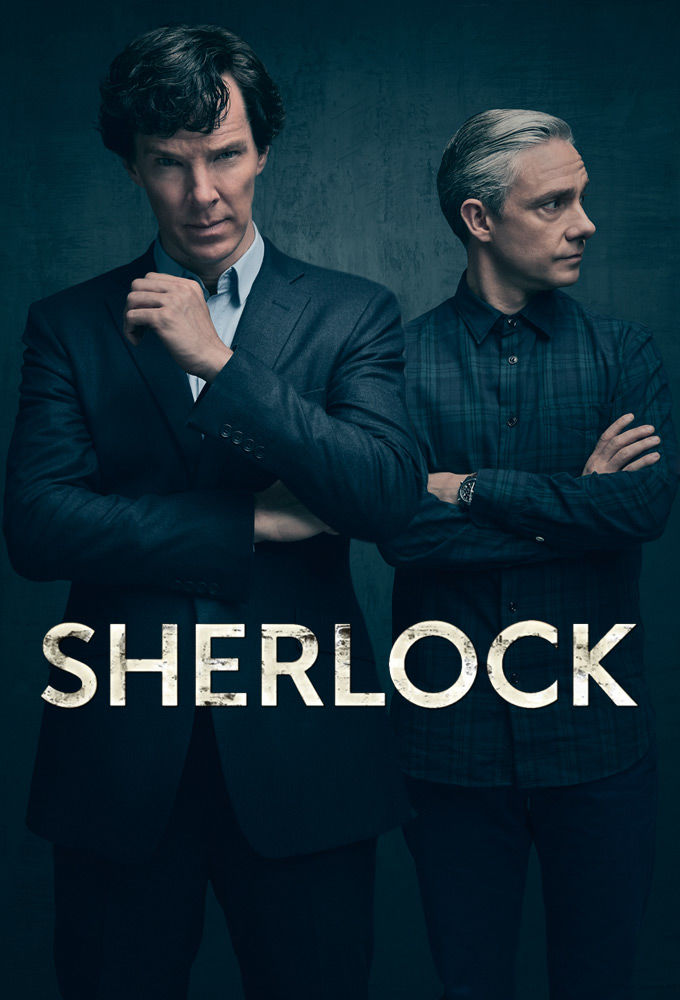
Sherlock
Sherlock Holmes and Dr. John Watson's adventures in 21st Century London. A thrilling, funny, fast-paced contemporary reimagining of the Arthur Conan Doyle classic.
Original source and availability.
How stressful it gets.
Every ShowFrog title carries an overall stress level based on how intense the show gets. Sherlock lands at some stress.
Format, pacing, and ending.
Verdict box
The verdict: Sherlock, the 2010-2017 BBC mystery series, is not a gore-heavy crime show, but it is also not cozy deduction. The Moderate warning comes from corpses, morgue and autopsy imagery, shootings, bombs, blood, a child drowning threat, mild torture, mental-torture set pieces, and disturbing final-season intensity. Its main appeal is still the clever, stylish, performance-driven BBC mystery engine; the tolerance cost is that the later mythology and finale can feel darker, stranger, and more stressful than the early cases suggest.
ShowFrog Editor's Read
- Why people still return to it: The practical appeal is Benedict Cumberbatch and Martin Freeman, brisk deduction, cinematic case structure, Moriarty energy, and early episodes that made the show feel unusually sharp.
- Where the love splits: The final season is the dividing line. Collider supports the overstuffed ordeal-structure caveat, while audience discussion often separates love for the cast and early run from frustration with later writing.
- The tolerance caveat: Common Sense Media supports the body/dead-person/scary-suspense warning, and the ShowFrog read is that stress rises from mind games and threat, not from constant onscreen gore.
Why we scored it this way
ShowFrog keeps Sherlock in Moderate violence/gore because the graphic profile includes dead bodies, blood, post-mortem detail, shootings, threats, bombs, and some disturbing imagery, but the evidence does not support a High gore lane. It becomes harder through threat and psychological ordeal rather than sustained graphic violence.
The 7/10 stress comes from intensity swings: movie-length cases, Moriarty pressure, final-season traps, emotional manipulation, and a shift from clean deduction into heavier mythology.
Fits you / skip it
- Fits if you want clever, stylish BBC mystery with strong performances and can handle moderate crime imagery.
- Fits if a divisive finale is acceptable as long as the series has a practical endpoint.
- Skip if corpses, morgue detail, suicide imagery, child-danger setups, or psychological torture are wrong for tonight.
- Skip if you want every season to feel as clean and case-driven as the earliest run.
The stress, separated from the gore
Sherlock's stress is about escalation. The gore stays moderate, but the later episodes can feel intense because the show leans into traps, emotional games, bombs, and horror-like pressure.
Commitment & ending
The 2010-2017 BBC run has 4 seasons and 15 feature-length episodes. It has a practical endpoint, but resolved does not mean universally satisfying: some viewers read the finale as a usable reset, while others find it rushed, confusing, or emotionally unsatisfying.
If this is too much / not enough
Lower-violence options:
- Broadchurch (2013) - Low - stress 7/10 - Completed & resolved - emotional mystery pressure with less graphic body-detail emphasis.
- Queens of Mystery (2019) - Low - stress 3/10 - Cliffhanger risk - gentler British mystery when Sherlock feels too sharp-edged.
- Rosemary & Thyme (2003) - Low - stress 3/10 - Cancelled, case-by-case - softer casework with a calmer aftertaste.
Sharper options:
- Line of Duty (2012) - High - stress 8/10 - Returning; Series 7 confirmed - institutional police pressure with a harder violence ceiling.
- The Alienist (2018) - High - stress 9/10 - Completed, case arcs resolve - period crime darkness with more graphic case material.
- Luther (2010) - High - stress 9/10 - TV run ends; franchise continues - urban detective danger with a much harsher threat profile.
FAQ
Is Sherlock gory?
Usually not in a gore-first way. It is Moderate because bodies, morgue detail, shootings, blood, bombs, and disturbing imagery are part of the show, especially as the series gets darker.
Can I watch this if I do not like violence?
Maybe, if your issue is splatter. If morgue imagery, suicide imagery, child danger, or psychological torture are hard limits, skip it.
Is it worth watching despite the warning?
Yes, if you want stylish mystery, strong performances, and puzzle energy. The caveat is not just violence; it is the uneven later writing and divisive finale.
Can I watch this before bed?
Not on nights when you need calm. The early episodes can be witty and propulsive, but the stress score reflects darker final-season pressure and emotional games.
Does it have a proper ending?
It has a practical endpoint, not a universally loved ending. If you only need no cliffhanger, it may work; if you need emotional satisfaction, the finale is a risk.
Common Sense Media · Collider · The Young Folks · Wikipedia)